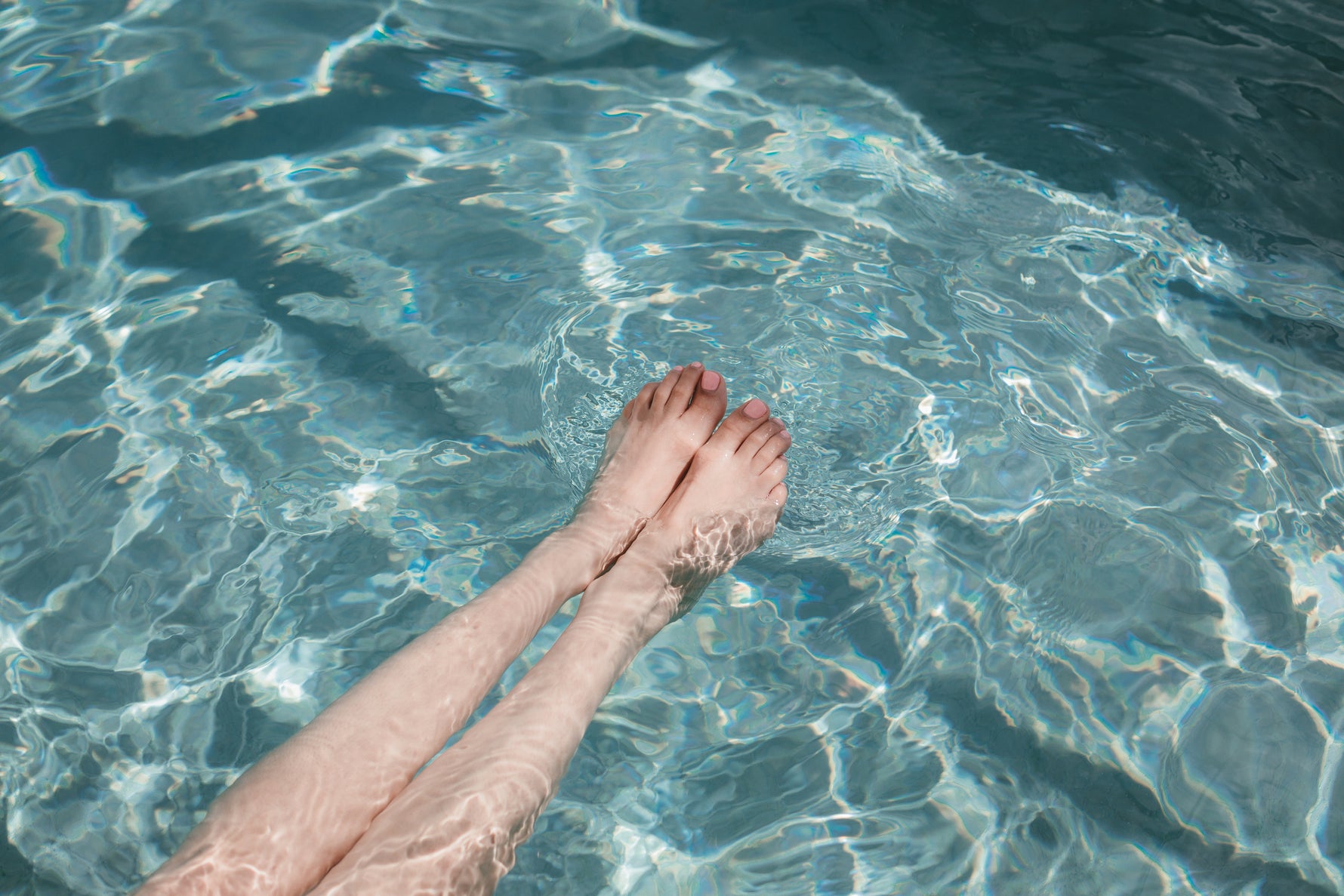

Can You Use Pool Chemicals in a Hot Tub? What to Know First
No, you shouldn't use pool chemicals in a hot tub, even when the active ingredients look the same on the label. Pool-grade products are formulated for water volumes of 50,000 litres or more at ambient outdoor temperatures, while a typical hot tub holds roughly 1,000 to 1,500 litres of water kept between 37°C and 40°C. That difference in scale and temperature changes everything. As our guide to what chemicals you need for a hot tub explains, spa water chemistry has its own specific requirements, and using the wrong products can cause skin and eye irritation, accelerate equipment wear, and void your hot tub manufacturer's warranty. If you've ever wondered whether hot tub chemicals are dangerous when misapplied, this is a good place to start.
Why Pool and Hot Tub Chemicals Are Not Interchangeable
The Volume Problem
A standard backyard swimming pool holds between 50,000 and 75,000 litres of water. A typical hot tub holds around 1,000 to 1,500 litres. That means a pool is roughly 40 to 60 times larger than a hot tub, and every pool chemical on the market is dosed with that volume in mind.
When you add pool-grade products to a hot tub, you're not just using a slightly higher concentration. You're working with a product that's physically packaged and calibrated for bulk use. Pool shock tablets and granules are sized so that one scoop or one tablet treats thousands of litres. Trying to divide that down accurately for a 1,200-litre hot tub is genuinely difficult, and small measurement errors translate directly into dangerous chemical spikes.
Pool-grade calcium hypochlorite shock, for example, contains between 65 and 73 percent available chlorine. The recommended free chlorine range for a hot tub is 3 to 5 ppm. Even a fraction of a standard pool shock dose can instantly push your hot tub to 10 ppm or higher, well beyond the safe range and into territory that bleaches acrylic shells, degrades vinyl components, and irritates bathers. Read our full breakdown of shocking a hot tub with chlorine if you need to oxidise your water safely, and see how to lower chlorine levels in a hot tub if you've already overshot the target. If you've added too much, a chlorine neutralizer for your hot tub may help bring levels back down.
Temperature Changes Everything
Hot tub water sits at 37°C to 40°C, and that heat doesn't just feel different on your skin. It dramatically changes how chemicals behave.
Chlorine breaks down much faster in hot water than it does in a cool pool. It off-gasses more rapidly at the surface, which means it disappears from the water quickly and releases more chemical vapour into the air you're breathing above the tub. At pool temperatures, this is a slow and manageable process. At hot tub temperatures, it becomes a cycle where you add chlorine, it dissipates within hours, and the water is left under-sanitised between doses.
Hot water also amplifies the irritating effects of chlorine on skin and mucous membranes. The same chlorine concentration that feels fine in a pool can cause red eyes, itchy skin, and respiratory discomfort when you're soaking in it at 39°C. This is one reason why bromine is widely preferred over chlorine for hot tubs. Bromine remains stable and effective at temperatures above 37°C, and it works across a wider pH range (7.0 to 7.8) compared to chlorine, making it more forgiving in the dynamic chemical environment of a hot tub.
pH and Alkalinity Are Harder to Control
Hot tub pH levels need to stay between 7.2 and 7.8. The high water temperature causes pH to drift upward more quickly than in a pool, so adjustments need to be more frequent and more precise.
Pool pH-adjusting products are typically sold in quantities sized for pool volumes. Pouring even a small splash of pool-grade pH decreaser into a hot tub can send the pH crashing below 7.0, corroding metal jets, heater elements, and pump seals. Muriatic acid is one example. It's used in both pool and spa care to bring pH down, but in a hot tub it requires a much more cautious approach because the consequences of even a slight overdose are immediate and corrosive. Our guide to using muriatic acid in a hot tub covers the proper technique if you need to use it.
Total alkalinity in a hot tub should be maintained between 80 and 120 ppm. Pool alkalinity increaser products are often sold in large quantities with scooping instructions based on pool volumes, making it easy to overshoot the narrow target range of a hot tub. A small excess can cause the pH to resist correction and create a carbonate scale on the shell and jets. See our guide to hot tub alkalinity increaser for proper hot tub-specific guidance on this.
The Cyanuric Acid Problem
Pool chlorine tablets (trichlor) include cyanuric acid as a UV stabiliser. This makes sense in an outdoor pool where sunlight would otherwise burn off chlorine within hours. In a hot tub, this stabiliser is unnecessary and actively harmful.
Because a hot tub holds so little water, cyanuric acid accumulates quickly with each dose. As levels rise, cyanuric acid binds to available chlorine and reduces its sanitising power, a condition known as chlorine lock. You end up adding more and more chlorine to chase a safe reading while the water becomes less and less protected. This is a well-documented risk with pool products repurposed for hot tub use, and it's one reason why spa-specific chlorine products are formulated without cyanuric acid.
Algaecides and Other Pool Additives
Pool algaecides are another category worth avoiding in a hot tub. Many of them contain copper-based compounds or high concentrations of quaternary ammonium. Copper can stain acrylic hot tub surfaces. Quaternary ammonium compounds foam aggressively when jets are running, producing the kind of persistent foam that's frustrating to deal with and indicates a real water chemistry imbalance. At elevated hot tub temperatures, both types of compounds are also more irritating to skin.
What About Shared Chemicals?
Some products genuinely overlap between pools and hot tubs. Sodium bicarbonate (used as a pH and alkalinity increaser), sodium bisulphate (pH decreaser), and non-copper algaecides formulated for spas are examples. Even these, though, must be dosed for hot tub volumes. Following the instructions on a pool-oriented label will almost always result in adding too much.
Pool test kits are also worth mentioning here. Standard pool kits measure chlorine in the 0 to 5 ppm range and don't measure bromine at all. Since bromine is a common hot tub sanitiser and hot tub chlorine targets overlap with the upper end of pool kit ranges, a pool test kit won't give you reliable readings. Spa-specific test strips are a better fit for hot tub water care routines.
Using pool chemicals in a hot tub also risks voiding the manufacturer's warranty. Most hot tub warranties specify the use of spa-grade products within defined concentration ranges. If a service technician finds evidence of pool-grade chemicals in the system, the warranty claim may be rejected.
For a detailed look at which spa-specific products work best together, our best hot tub chemicals comparison guide and ultimate hot tub chemicals kit guide cover the options side by side.
What to Use Instead of Pool Chemicals in Your Hot Tub
The safest and most reliable approach is to use chemicals specifically labelled and formulated for hot tubs or spas, not scaled-down versions of pool products. Spa-specific products are dosed for smaller water volumes, tested at higher temperatures, and designed with the tighter chemical tolerances of hot tub water in mind.
For sanitisation, a bromine-based system is the most practical choice for most hot tub owners. Bromine stays effective at hot tub temperatures and across a wider pH range than chlorine, which means more consistent protection between doses and less guesswork. You can learn more about the options in our bromine hot tub tablets vs granules guide.
If you'd rather not manage multiple separate products at all, the TubTabs Hot Tub Complete Care Kit brings everything together in one bundle. It includes 15 TubTabs weekly all-in-one maintenance tablets, which handle oxidising, pH balancing, clarifying, de-foaming, and scale control, alongside 25 BroTabs slow-dissolving bromine sanitiser tablets for continuous water protection. The kit is priced at $159.99 CAD and covers three to four months of use.
TubTabs are formulated specifically for hot tub water chemistry. Each tablet delivers the correct dose for a standard hot tub volume without requiring manual calculations or conversions from pool-scale instructions. That removes the dosing guesswork that makes repurposed pool products risky. You can compare the full range of hot tub-specific chemical options in our best hot tub chemicals guide.
Stop juggling multiple chemicals. Try TubTabs.
Frequently Asked Questions
Can I use pool shock in my hot tub?
You shouldn't use standard pool-grade shock in a hot tub unless the product is explicitly labelled as safe for spa use. Pool shock, particularly calcium hypochlorite, is formulated for water volumes of 50,000 litres or more. Adding even a small amount to a 1,200-litre hot tub can push free chlorine levels well above 10 ppm, causing skin and eye irritation, bleaching the shell, and damaging equipment. If you need to oxidise your hot tub water, use a shock product specifically dosed for spa volumes, or see our guide to shocking a hot tub with chlorine for safe practices.
Is pool chlorine the same as hot tub chlorine?
No. The most common pool chlorine tablets are trichlor, which contain cyanuric acid as a UV stabiliser. Cyanuric acid is unnecessary in a hot tub (which isn't exposed to direct sunlight) and accumulates quickly in the small water volume, eventually binding available chlorine and reducing its effectiveness, a condition called chlorine lock. Hot tub-specific chlorine products are formulated without cyanuric acid and in smaller doses suited to spa water volumes.
Why is pool chemistry different from spa chemistry?
Pool chemistry and spa chemistry differ in three key ways: water volume, water temperature, and bather load concentration. A pool holds 50,000 to 75,000 litres; a hot tub holds around 1,000 to 1,500 litres. Hot tub water is kept at 37°C to 40°C, which accelerates chemical reactions, causes sanitiser to off-gas faster, and drives pH upward more quickly. The smaller volume also means a single bather introduces a proportionally much larger amount of body oils, sweat, and cosmetics than the same bather would in a pool, demanding more precise and frequent chemical management.
Can I use a pool test kit on a hot tub?
A pool test kit will give you a rough reading, but it's not ideal for a hot tub. Pool test kits are calibrated for chlorine in the 0 to 5 ppm range and don't measure bromine accurately, since bromine is a common hot tub sanitiser. Hot tub water chemistry also requires testing for total alkalinity and calcium hardness within tighter ranges than pool kits typically display. Using spa-specific test strips or a digital test kit calibrated for hot tub ranges will give you far more accurate and actionable results.
Is it dangerous to use pool chemicals in a hot tub?
Yes, it can be. The combination of high water temperature and a small water volume means pool chemicals can reach hazardous concentrations very quickly in a hot tub. Over-chlorinated water at 40°C releases chlorine gas more aggressively, causing respiratory irritation, red eyes, and skin burns with prolonged exposure. Structural damage is also a real concern: high chlorine concentrations can bleach or crack acrylic shells, corrode metal components, degrade rubber seals, and damage pump and heater internals. Using pool chemicals in a hot tub also risks voiding the manufacturer's warranty on equipment and shell components. Our guide to hot tub chemicals safety covers the broader risks in more detail.
Partager